

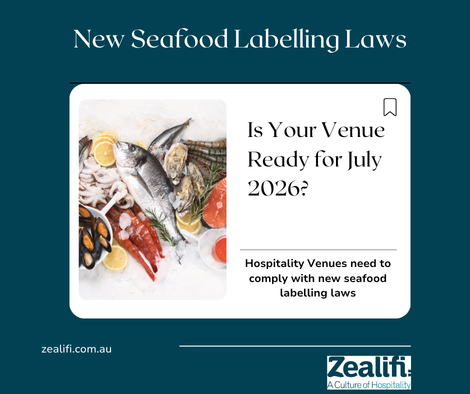
Is Your Venue Ready for July 2026?
Hospitality venues across Australia will soon need to comply with new seafood labelling laws designed to improve transparency for customers and help them make informed choices when ordering meals.
From 1 July 2026, venues serving seafood for immediate consumption will need to clearly identify where the seafood comes from using a new national labelling system.
For many hospitality businesses, this will mean updating menus, reviewing supplier information, and ensuring staff understand the new requirements before the laws commence.
What is Changing?
The new requirements apply to:
- Restaurants
- Cafés
- Pubs and clubs
- Takeaway businesses
- Catering operations
- Food trucks and market stalls
If your venue serves seafood for immediate consumption, these laws are likely to apply.
Understanding the AIM Labelling System
Under the new system, seafood dishes must display one of three labels:
- A = Australian
- I = Imported
- M = Mixed origin (Australian and imported seafood)
Examples may include:
- Grilled Barramundi (A)
- Garlic Prawns (I)
- Seafood Basket (M)
The aim is to provide customers with clear and consistent seafood origin information before they place an order.
Where Must the Labels Be Displayed?
Customers must be able to see seafood origin information before ordering. This means labels may need to appear on:
- Printed menus
- Digital menus
- Menu boards
- Venue signage
- Online ordering platforms and apps
The information must be accurate, clear, and easy for customers to understand.
What Foods Need Labelling?
The rules generally apply when seafood is:
- A key ingredient in the dish
- Clearly promoted or marketed to customers
- Ready for immediate consumption
Examples include:
- Seafood pasta
- Fish dishes
- Prawn meals
- Seafood platters
A good rule of thumb is:
If seafood is a major feature of the dish and customers are selecting it from the menu, it likely needs a label.
Important Exceptions Hospitality Venues Should Know
One of the biggest misunderstandings surrounding the new laws is the belief that every menu item containing seafood requires labelling. This is not the case.
Labels are generally not required when:
- Seafood is only a minor ingredient
- The dish is not marketed as seafood
- Seafood is highly processed or shelf-stable
- Seafood is served at fundraising events
- Meals are pre-ordered more than 24 hours in advance
Examples where labelling may not apply include:
- Supreme pizza containing small anchovy amounts
- Fish sauce or prawn oil
- Canned tuna products
- Pre-booked set menus ordered in advance
Understanding these exemptions will help venues avoid unnecessary confusion and menu clutter.
What This Means for Venue Staff and Management
Staff
Frontline staff should understand:
- What A, I, and M mean
- How to answer customer questions confidently
- Why accurate menu information matters
Managers and Licensees
Managers may need to:
- Update menus and ordering systems
- Confirm seafood origins with suppliers
- Train staff on the new requirements
- Monitor venue compliance
Business Owners and Compliance Teams
Compliance responsibilities may include:
- Ensuring accurate representations to customers
- Maintaining supplier documentation
- Avoiding misleading information under consumer law
Why These Laws Matter
The new seafood labelling laws are designed to:
- Improve customer transparency
- Support informed purchasing decisions
- Reduce misleading food information
Venues that fail to comply may face enforcement action or breaches under Australian Consumer Law.
While July 2026 may still seem some time away, venues that begin preparing early will likely find implementation much smoother. To find out more information please visit the Australian Government Business website – Seafood labelling laws are changing for hospitality businesses
At Zealifi, we continue to monitor emerging hospitality compliance requirements and incorporate current industry updates into our training programs to help venues and staff stay informed, compliant, and prepared for industry change. We update regularly our Links page that includes new industry engagement fact sheets ready to download, share and read.